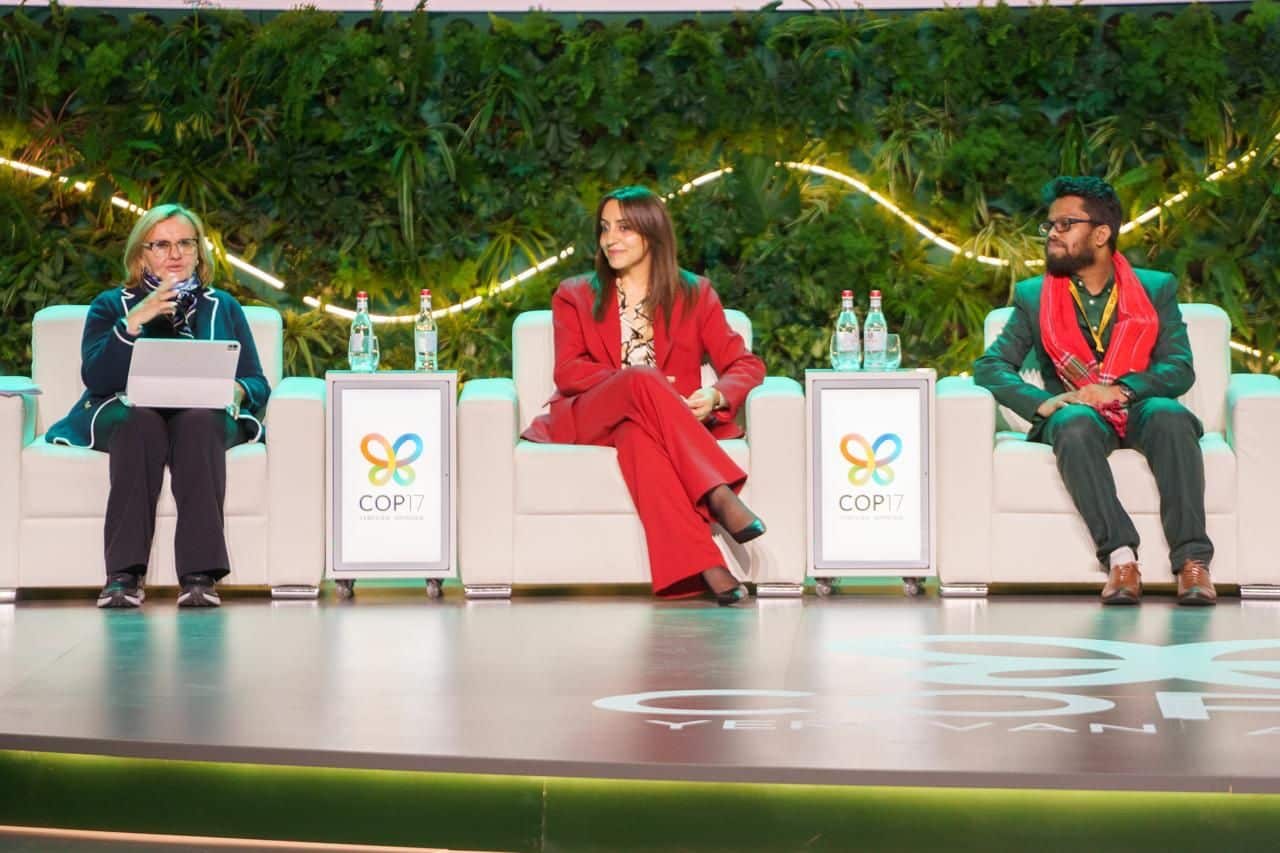
At the UN Biodiversity Conference in Yerevan, Vital Voices joined global advocates to call for greater investment, inclusive decision-making, and recognition of women and community leaders driving environmental solutions.
YEREVAN, ARMENIA — As global leaders gathered for the 17th Conference of the Parties to the Convention on Biological Diversity (COP17), Vital Voices Global Partnership brought a powerful message to the international stage: women are already leading solutions to the world’s most urgent environmental challenges. It’s time to ensure they have the resources, rights, and decision-making power to drive lasting change.
On October 20, Vital Voices partnered with MenEngage Alliance’s Climate and Environmental Justice Working Group to host “Taking Action for Nature and Health Together: Women’s Leadership and Inclusive Partnerships for Biodiversity and Well-being.” Held on the COP17 Green Zone Main Stage in Yerevan, Armenia, the discussion brought together women leaders, Indigenous advocates, youth changemakers, and environmental experts to explore how inclusive leadership can strengthen biodiversity conservation and community resilience.
The conversation underscored a central challenge in global environmental action: while women and local communities are often on the frontlines of protecting natural resources, they continue to face significant barriers to funding, land rights, and meaningful participation in decisions affecting their futures.

From Recognition to Resources: Investing in Women’s Environmental Leadership
Moderated by Marina Pisklakova-Parker, Vice President of Issue Advocacy at Vital Voices, the discussion drew on insights from Vital Voices’ policy brief, Women-Led Climate Adaptation: Investing in Women’s Leadership for Climate Resilience.
The brief reinforces the importance of investing in women-led solutions and recognizing women as essential decision-makers in building climate resilience.
Throughout the discussion, speakers emphasized that recognizing women’s contributions is only the beginning. To advance meaningful environmental progress, governments, institutions, and funders must ensure that women-led and grassroots organizations have direct access to financial resources and opportunities to shape conservation priorities.
The message was clear: women must not only be included in environmental conversations. They must have the power to lead them.
Elevating Indigenous Knowledge and Community-Led Solutions
The discussion also highlighted the critical role of Indigenous women and local communities in protecting biodiversity.
Fany Kuiru Castro, General Coordinator of the Coordinator of Indigenous Organizations of the Amazon Basin, emphasized the importance of Indigenous women’s leadership, traditional knowledge, and territorial rights in safeguarding ecosystems.
Drawing on her experience as an Indigenous leader from Colombia, Kuiru connected the protection of the Amazon to the well-being of future generations, underscoring how healthy forests and rivers sustain livelihoods, food security, and cultural identity.
Other speakers highlighted the importance of translating community knowledge into collective action and ensuring that local voices shape the policies and investments intended to support them.
Their contributions reinforced a fundamental principle of Vital Voices’ work: lasting solutions emerge when leaders closest to the challenges have the opportunity and resources to shape the response.
Building a More Inclusive Movement for Nature
Advancing gender equality in environmental leadership also requires engaging men and boys as active partners in change.
Sohanur Rahman, a Bangladeshi youth and climate justice advocate representing YouthNet Global, highlighted how unequal caregiving responsibilities and restrictive gender norms can prevent women from participating fully in environmental decision-making.
Drawing on Bangladesh’s EcoMen initiative, Rahman emphasized the importance of challenging these norms and encouraging men and boys to share caregiving responsibilities and support women’s leadership.
Vidar Vetterfalk of the Swedish organization MÄN echoed this call, emphasizing that meaningful allyship requires action, accountability, and a willingness to redistribute responsibilities and power.
Together, these perspectives illustrated how environmental progress and gender equality are deeply interconnected—and why building a more sustainable future requires collaboration across generations, communities, and genders.
Turning Global Commitments into Local Impact
The conversations at COP17 reflected a broader call to move beyond commitments and accelerate action.
Under the Kunming-Montreal Global Biodiversity Framework, countries have committed to mobilizing greater financial resources for biodiversity conservation and advancing inclusive participation in environmental decision-making.
Yet speakers emphasized that the success of these commitments will ultimately depend on whether funding, resources, and decision-making authority reach the communities working to protect ecosystems every day.
From Indigenous women defending the Amazon to entrepreneurs advancing circular economy solutions and grassroots advocates promoting environmental health, the leaders represented at COP17 demonstrated the power of locally driven action.
For Vital Voices, their work reflects a simple but transformative truth: when women have the resources and opportunities to lead, their impact extends far beyond themselves—strengthening communities, protecting ecosystems, and creating a more resilient future for all.
As global discussions continue in Armenia, Vital Voices remains committed to amplifying women’s leadership and advocating for the partnerships, investments, and systemic changes needed to turn environmental commitments into meaningful, lasting impact.
Learn More
Explore Vital Voices’ policy brief, Women-Led Climate Adaptation: Investing in Women’s Leadership for Climate Resilience, and discover how women leaders are advancing climate solutions around the world.
Watch the COP17 Discussion: Taking Action for Nature and Health Together
Read the Media Coverage: Women, Youth and Indigenous Leaders Demand Direct Funding and Decision-Making Power at COP17 — The Business Standard