Vital Voices launches Women-Led Climate Adaptation, a new policy brief demonstrating why investing in women’s leadership is essential to building climate resilience, and Women At the Heart of Climate Solutions, a toolkit with stories, strategies, and solutions from our network women working towards climate resilience.
Around the world, the effects of climate change are already reshaping daily life. Droughts threaten harvests. Floods and storms disrupt communities. Rising temperatures place increasing pressure on health, livelihoods and natural resources.
But alongside these challenges, another story is unfolding: women are already developing solutions.
In Kenya, women farmers are reviving drought-resistant Indigenous seeds and restoring depleted soils. In Uganda, a woman-led social enterprise is preventing used engine oil from contaminating rivers and groundwater. In northern Nigeria, clean energy is powering women’s businesses and strengthening their economic independence. Across the Caribbean, women are advocating for healthcare, shelters and recovery systems designed to withstand increasingly severe hurricanes.
These leaders are at the heart of Women-Led Climate Adaptation: Investing in Women’s Leadership for Climate Resilience, a new policy brief from Vital Voices Global Partnership examining what becomes possible when women have the resources, rights and recognition to lead.
Climate change magnifies inequality. Women’s leadership can multiply resilience.
Nearly 3.6 billion people—almost half of humanity—are highly vulnerable to climate impacts including drought, floods, storms and heat stress.
Women, particularly those in Indigenous, rural and Global South communities, often experience these impacts disproportionately. But the reason is not an inherent vulnerability. It is unequal access to the resources that help people prepare, adapt and recover: land, finance, information, public services and decision-making power.
Where those inequalities narrow, disparities in climate vulnerability narrow too.
At the same time, evidence examined in the brief points to the role women’s leadership can play in strengthening resilience. Women are protecting ecosystems, adapting agricultural practices, managing water resources, building clean-energy enterprises and helping communities prepare for and recover from disasters.
The economic implications are significant as well. The UN Food and Agriculture Organization estimates that closing gender gaps in farm productivity and wages in agrifood systems could increase global GDP by approximately 1%—nearly $1 trillion—and reduce the number of food-insecure people by about 45 million.
For Vital Voices President and CEO Alyse Nelson, these findings reinforce something Vital Voices has witnessed through decades of partnership with women leaders.
“When women lead, resilience follows. Communities recover faster. Resources are managed more sustainably. Peace holds longer.”
Leadership born from the needs of a community
The brief brings this evidence to life through women in the Vital Voices Global Network whose leadership spans continents and sectors.
In Kenya’s arid and semi-arid regions, Doreen Irungu, founder of Ustawi Afrika, works alongside women farmers confronting drought, erratic rainfall, rising temperatures and declining soil fertility.
Women supported by Ustawi Afrika are saving and planting Indigenous drought-resistant seeds, diversifying crops, restoring soil through composting and mulching, harvesting water using zai pits and sand dams, and adopting agroforestry and regenerative farming practices.
Their work illustrates an important principle at the center of the new brief: communities do not necessarily need to wait for climate solutions to arrive. In many places, women are already developing and implementing them.
What they need is the opportunity to take those solutions further.
The same pattern emerges across the Vital Voices Network.
Namuwonge Zaitun is tackling pollution in Uganda by recycling used engine oil into affordable lubricants while engaging women in environmental stewardship.
Habiba Ali is expanding reliable clean energy for women’s food-processing and agricultural enterprises in northern Nigeria.
Joana Bacallo is advancing gender-responsive water, sanitation and education systems with Indigenous and displaced communities in the Philippines and Pakistan.
Samantha Deane is working across forest and marine ecosystems in Argentina and coastal Namibia, supporting Indigenous women’s access to traditional plants and elevating women’s contributions to fishing communities.
And Nicole Joseph-Chin is championing an “infrastructure of care” across the Caribbean: resilient healthcare facilities, recovery centers and shelters that recognize the responsibilities women often carry during and after hurricanes.
Their work reflects the ripple effect at the heart of Vital Voices’ approach to leadership: invest in a woman already deeply rooted in her community, and the impact can extend far beyond one individual.
“They became leaders because their communities needed them to be.”
In her foreword accompanying the new climate resources, Alyse Nelson reflects on what connects these women despite the very different communities and environments in which they work.
“None of these women set out to become climate experts — they became leaders because their communities needed them to be.”
That distinction matters.
Women should not be viewed only as people vulnerable to climate change or beneficiaries of climate interventions. They are innovators, knowledge holders, entrepreneurs, farmers, advocates and community leaders whose lived experience can shape more effective responses to it.
As Nelson writes, their leadership is often “born of necessity, sustained by generational knowledge, and too often overlooked by the institutions that could scale it.”
The mandate exists. The investment must follow.
The new brief also makes clear that recognizing women’s role in climate adaptation is not a new policy proposition.
International frameworks including the Convention on the Elimination of All Forms of Discrimination against Women, Article 7 of the Paris Agreement and the Sendai Framework already establish commitments to women’s participation and gender-responsive climate adaptation.
The gap is between those commitments and what happens on the ground.
Vital Voices’ brief identifies five areas for action: strengthening women’s leadership in climate governance; removing structural barriers such as insecure land rights; expanding access to climate finance, technology and resources; improving data, knowledge and accountability; and expanding inclusive leadership and climate-resilient livelihoods.
Direct investment in women-led organizations and locally led adaptation is central to those recommendations.
As Nelson writes:
“What’s missing isn’t the mandate. It’s the investment, access, and recognition to grow these solutions into systemic change.”
From local solutions to systemic change
Vital Voices was founded on a simple idea: communities cannot move forward without women in leadership. For nearly three decades, the organization has identified women with a bold vision for change and partnered with them over the long term to expand their skills, connections, capacity and visibility.
Climate adaptation makes the urgency of that investment increasingly clear.
The women featured in Women-Led Climate Adaptation are not waiting for a future solution. They are restoring land, protecting water, strengthening food systems, expanding clean energy and redesigning how communities prepare for disasters today.
The opportunity now is to ensure their leadership has the resources to travel further.
As Nelson concludes, investing in that leadership is not simply a call for what the world should do next. It is recognition of “what’s already possible when women have the resources, rights, and recognition to lead.”
Explore the full Women-Led Climate Adaptation policy brief and Women at the Heart of Climate Solutions toolkit to discover the research, recommendations and women leaders advancing climate resilience around the world.
Access the Policy Brief and Toolkit
Women-Led Climate Adaptation: Investing in Women’s Leadership for Climate Resilience
Organized around the seven priority sectors of the UAE Framework for Global Climate Resilience and the Global Goal on Adaptation, this brief sets out the challenge, the evidence for women’s leadership, and concrete recommendations for governments, donors, and development partners.
Women at the Heart of Climate Solutions
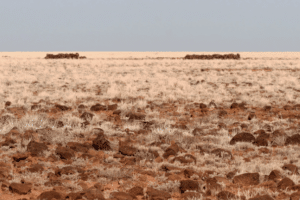
Through real-world case studies and firsthand perspectives, this toolkit showcases how women across regions are responding to climate challenges with innovative, locally driven solutions that strengthen community resilience